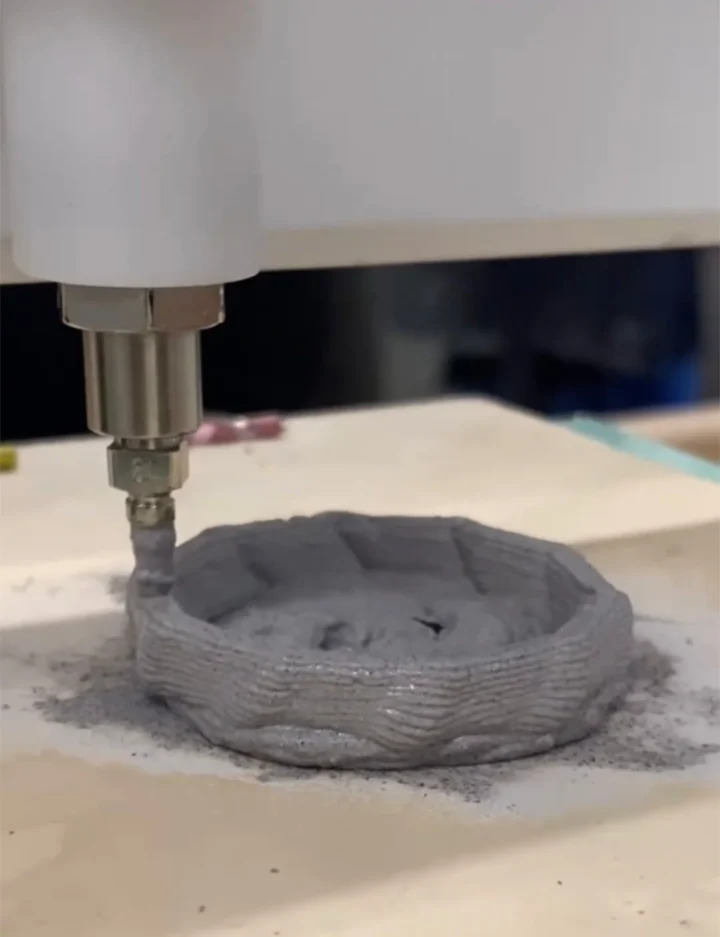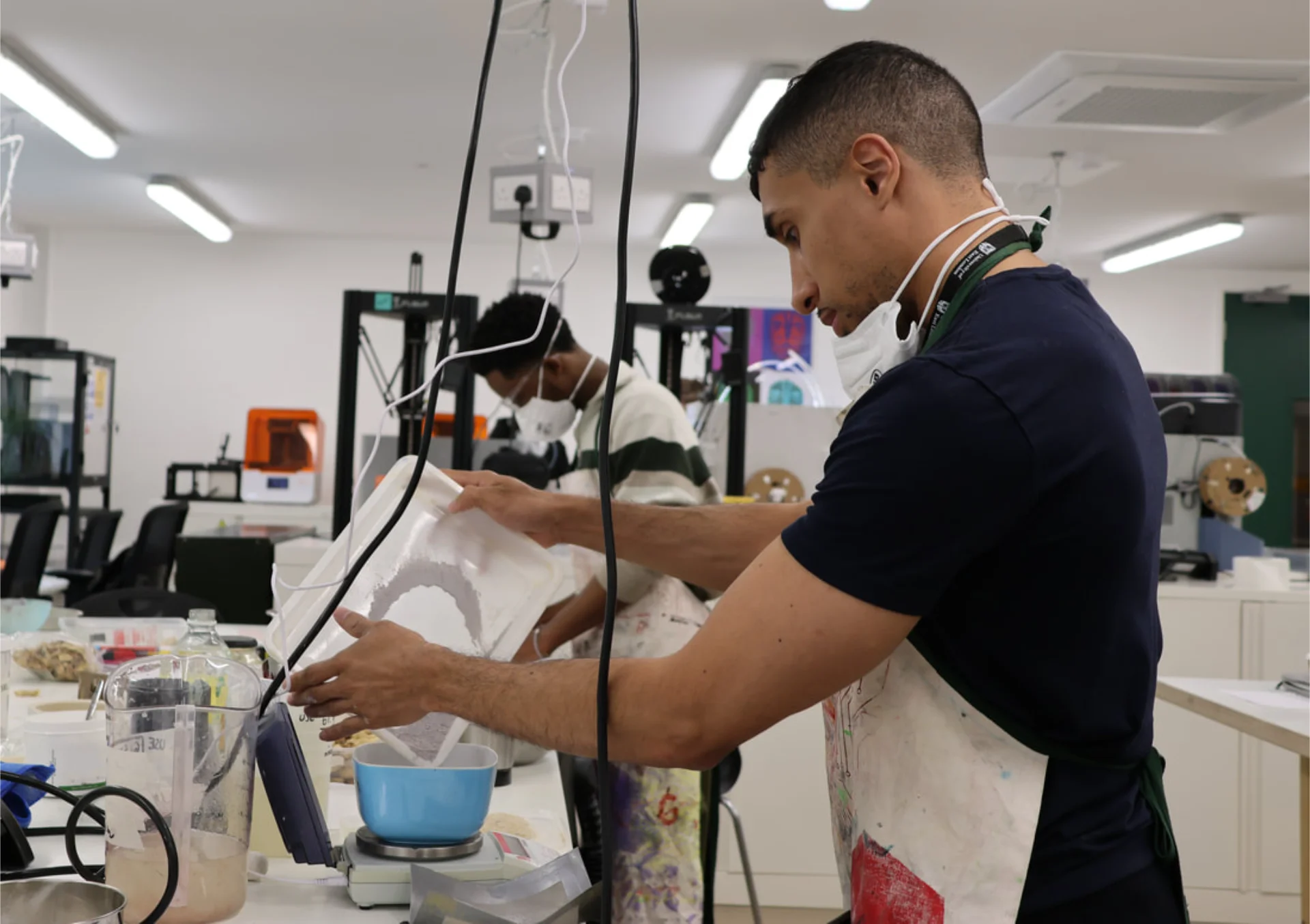
This summer, I.D.A’s Creative Director Susan Ginsburgh and Interior Designer Carlos Torres took part in Material reGeneration (reGen) — a collaborative, arts-led research project exploring sustainability, material reuse, and digital fabrication. Held at the DFuel Lab at the University of East London and led by artist Marie Louise Jones, funded by the East London Impact Scholars Award (ELISA), reGen brings together designers, technologists, and local communities to explore how digital fabrication and biomaterial composites can transform local waste into useful new material.
As part of the project, the I.D.A team contributed their interior design and academic expertise to explore how emerging biomaterials could be adapted for practical use in interiors. Their focus was on translating these experimental materials into viable surface finishes and spatial elements.
Susan and Carlos’s involvement reflects I.D.A’s ongoing commitment to circular design, sustainability, and pushing the boundaries of what materials can do in contemporary interiors.
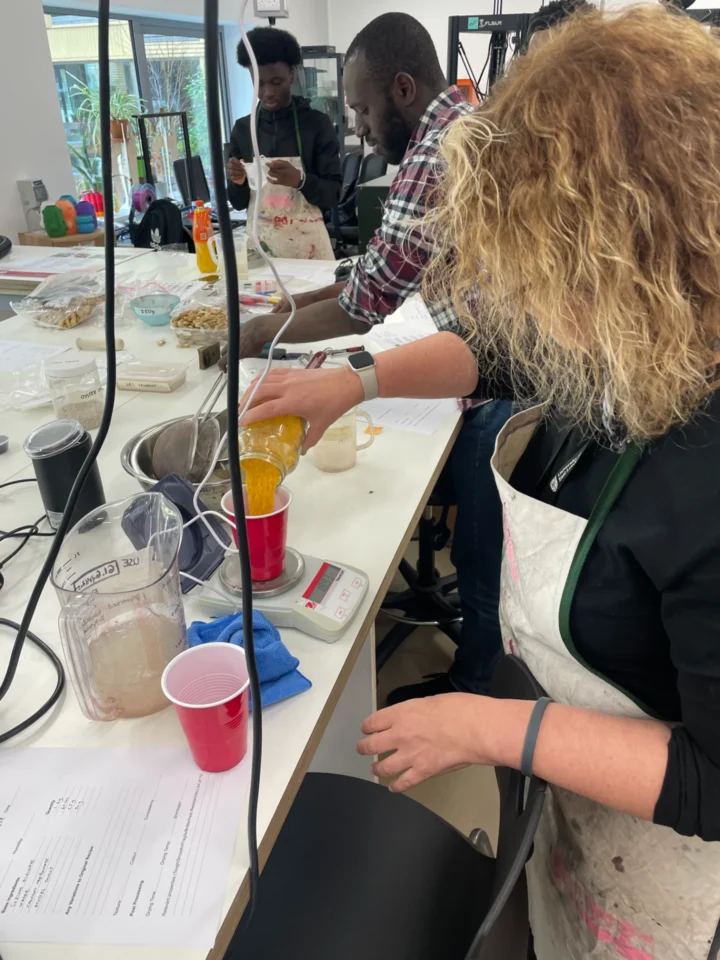
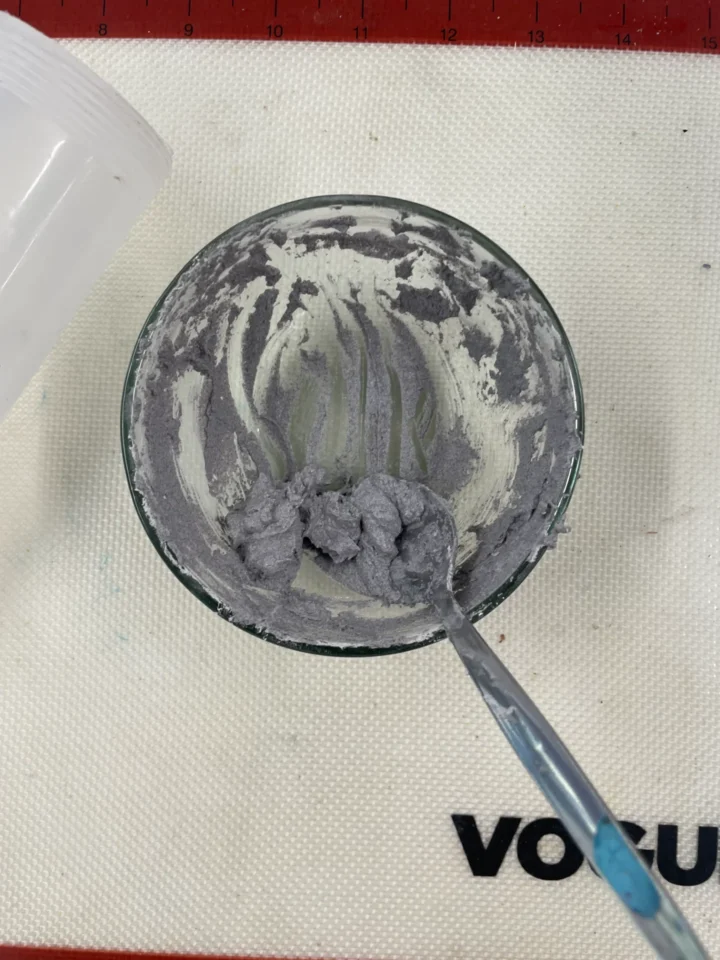
Susan and Carlos had helped generate a library of sample bio-composite panels and shapes, each with distinct characteristics. More importantly, they worked out a vision for how such materials might be applied in Interior Design. Imagine an accent wall in a café composed of undulating 3D-printed tiles made from crushed oyster shells, or a sculptural reception desk that literally incorporates local waste within its sleek form. These are no longer far-fetched ideas – they are tangible concepts born from the collaboration of material science and Interior Design.
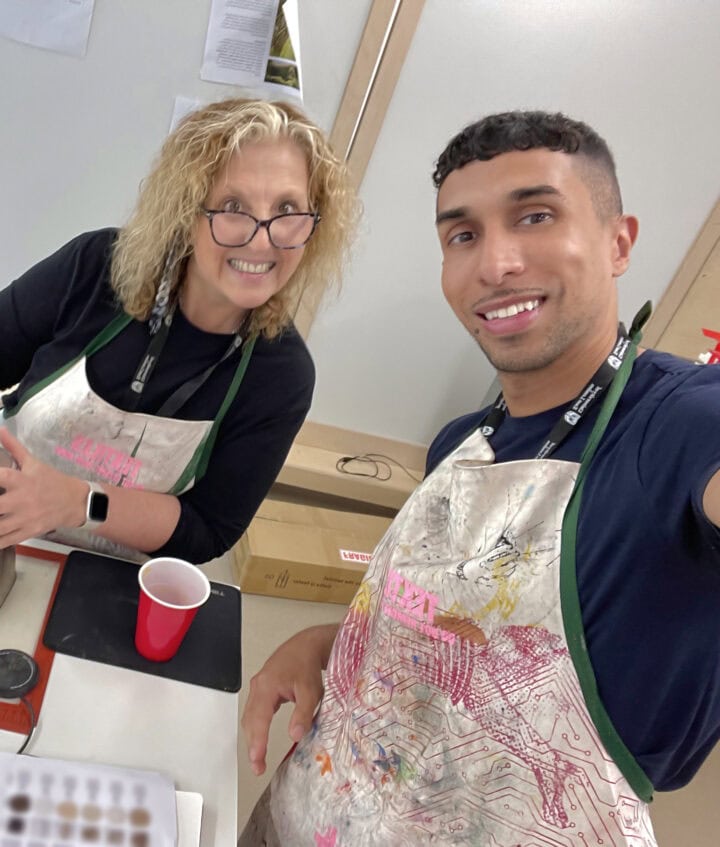
The reGen experience was a vivid reminder that innovation often happens at the intersection of disciplines: where art meets science, where digital fabrication meets natural materials, and where designers collaborate with researchers to redefine what is possible. One oyster shell at a time, I.D.A is committed to crafting interiors that are not only visually stunning, but also gentler on the planet – sustainability built into their very surfaces.